
by Deacon Anthony Gooley
In a very short while we will be celebrating the Solemnity of the Nativity, the birth of Jesus, on 25 December. The chances are that many of us have already started our preparations for the celebration.
These preparations might include making decisions about where we will gather for the day and coordinating who will bring what food to a communal celebration. There may be requests for a family member to bring their special dish that is everyone’s favourite. Some will have been really organised and purchased presents way ahead of time to give to family and friends. Others enjoy the adrenaline rush of last-minute gift buying (don’t forget the batteries).
In making our preparations there is a temptation to give in to an overly consumerist version of what Christmas should be. There are plenty of incentives on television to purchase gifts and to go over the top with planning an extravagant menu of food to overindulge our appetites. Done in moderation, the sharing of a Christmas feast and the exchange of gifts can be made a celebration that lifts the mind and heart to God.
From very early times we have records of Christians exchanging gifts on Epiphany and eventually on 25 December. These gifts would have been very modest, and the purpose of the exchange was largely symbolic.
Catholic customs around Christmas vary among countries and different types of Catholics. In some countries Christmas eve is the major feasting time and gifts may or may not be exchanged. In others, Christmas Day with the exchange of gifts is celebrated. In others, a feast may be celebrated on Christmas Day, but gifts are not exchanged until 6 January, the Feast of Epiphany, which marks the arrival of the Magi, who bring their gifts to Jesus. Some Catholics, especially those in one of the Eastern Catholic Churches, do not celebrate the Solemnity of Nativity at all, but only Epiphany.
From very early times we have records of Christians exchanging gifts on Epiphany and eventually on 25 December. These gifts would have been very modest, and the purpose of the exchange was largely symbolic. If we focus on the symbolism, we may be able resist the consumerist impulse and celebrate a meaningful Christ centred Christmas.
At the simplest level of symbolism, the exchange of gifts was to connect the celebration of the birth of Jesus with the gift giving of the Magi as recorded in Matthew (2:1-12). We do not know how many Magi came in the Gospel story. In traditional art and song, we frequently use the number three simply because Matthew mentions they brought three gifts, gold, frankincense, and myrrh.
In giving the infant Jesus gold and frankincense, the Magi evoke Isaiah (60:3-6) in which Gentile nations bring these gifts to the God of Israel (see also Tobit 13:11 and Psalms 72:10-15). In addition, myrrh is an oil that was used to consecrate Levitical priests and the wilderness tabernacle, the forerunner to the temple in Jerusalem (Exodus 30:23-33). Myrrh was also used as a burial ointment.
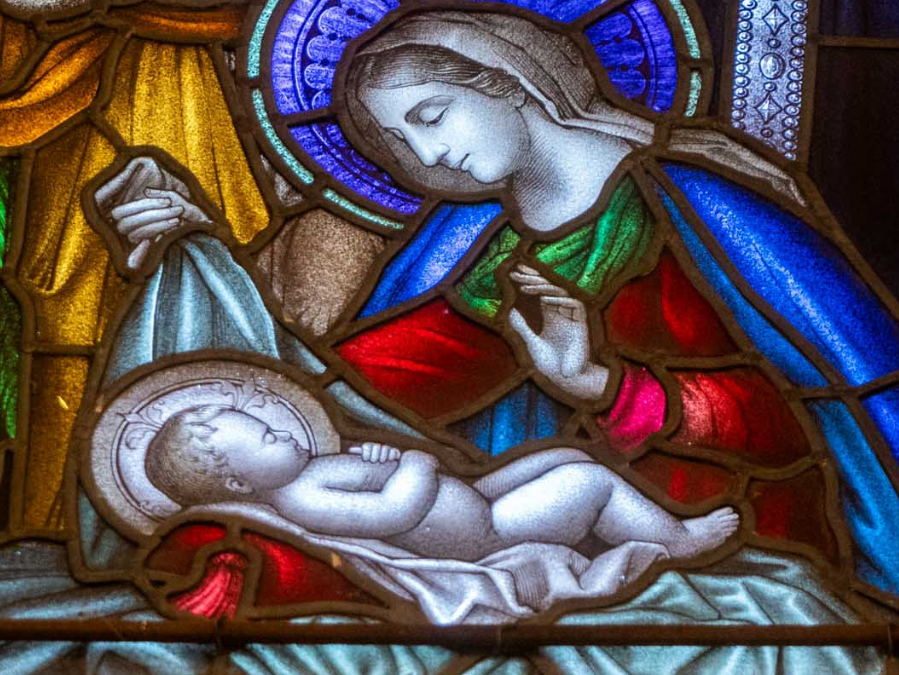
There are also the spiritual senses of Scripture. In the allegorical or Christological sense, St. Irenaeus says that the gifts signify the mystery of the Incarnate Word (God who has become a man): gold, a symbol of royalty, represents his kingship; frankincense, used in worship, points to his divinity; and myrrh represents his humanity, particularly in his passion and death (Against Heresies, 3.9.2).
One could also argue that the myrrh signifies that Jesus is also a priest, in fact the definitive high priest who fulfills the Old Covenant Levitical priesthood with his superior Melchizedekian New Covenant (see Hebrews 5-7); it also indicates that he is the new Temple (see John 2:18-22).
In the moral sense, i.e., how we are to live, Pope St Gregory the Great says in his Homilies on the Gospels that the three items represent gifts that we are to present to God in our daily lives: gold is Christ’s wisdom, which is to shine in our lives; frankincense is the prayer and adoration we are to give him (see Revelation 8:3-4); and myrrh is our daily self-sacrifices to the Lord (see Matthew 10:39 and Romans 12:1).
There is also another way to connect the exchange of gifts with the greater story of Christmas. In the Solemnity of the Nativity, we celebrate the mystery that God came among us as one like us in all things but sin. We call this the incarnation, that the Word became flesh and dwelt among us. Jesus is the gift which we receive at Christmas and every one we exchange becomes a sign of this essential gift.
God comes to us by taking on our humanity so that we may go to God by participating in his divinity.
During Mass, the deacon or priest will take a small amount of water and pour it into the chalice with these words, “By the mystery of this water and wine, may we come to share in the divinity of Christ who humbled himself to share in our humanity.” That is, there is a two-way exchange happening at Christmas.
God comes to us by taking on our humanity so that we may go to God by participating in his divinity. In this exchange, we give the whole of ourselves to God because He has given Himself to us in Jesus. Our Christmas gifts can become a sign of this great mystery.
We can celebrate with food and the exchange of gifts and lift our hearts and minds to God if we pause to pray before our family celebration. Thank God for the food, the company gathered and ask God to bless this and pray that we may give and receive each exchange as a sign of Christ’s presence among us. Give God thanks for what you’ve received on the day, and in life, and ask that God will grant you the wisdom to see in these gifts the greater gift, Christ Jesus, Emmanuel, God among us.